Marvel: Building the Digital Multiverse
I defined the product strategy, information architecture, interaction model, and creative direction for CanonMap, Marvel’s internal system for tracking and verifying story canon across films, series, and realities. I led the cross-functional work that turned fragmented reference material into a connected system experts could use to reach trusted story decisions faster.
▸ Senior Manager, UX / Mar 2022 – Mar 2024
▸ CanonMap iPad App / Marvel Studios
▸ Lead UI Designer + Lead UX Designer / Direct Reports

85%
Decrease in Research Time
4x
Platform Expansion
$1.5M+
Investment Secured
CES
Executive / Industry Showcase
1.0 The Opportunity
Marvel’s stories had outgrown the systems used to keep them coherent
As Marvel expanded across films, series, and alternate realities, answering basic story questions increasingly meant piecing together information from disconnected sources and institutional knowledge. What’s official? When did it happen? Which version of a character or object does it involve? The challenge wasn’t simply storing more information. It was creating a model experts could navigate and trust without flattening the nuance of the stories.

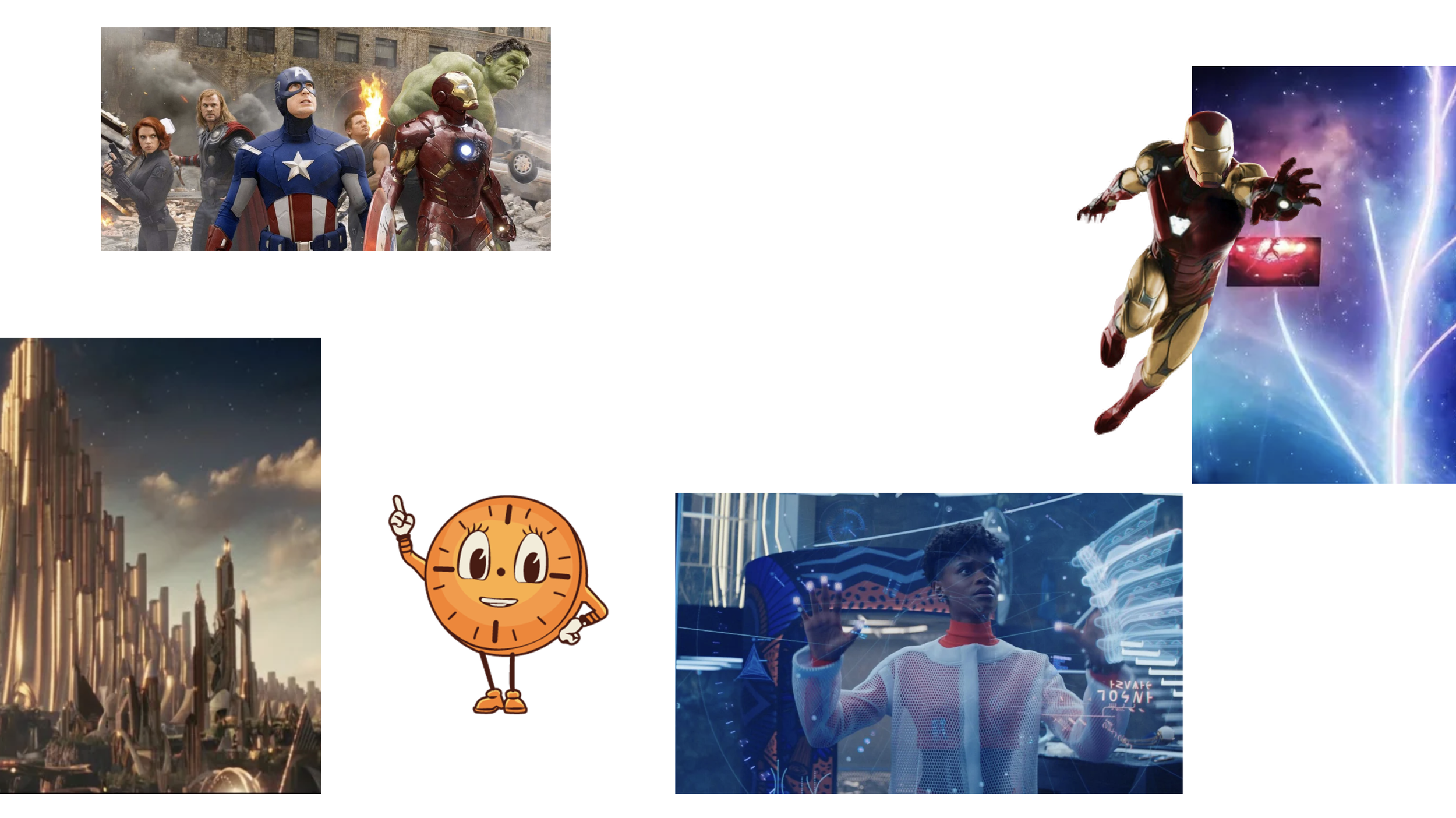
From Metadata to Multiverse
Turning complex, scattered information into a shared source of truth built for better decisions.
I helped to shape CanonMap’s information architecture, interaction model, and creative direction around a clear priority: enabling the people making consequential story decisions reach trusted answers faster. I led requirements sessions across product, engineering, and Marvel’s story teams, then translated those insights into a connected, cinematic model for navigating timelines, characters, and relationships. I set the initial design direction and led our UX and UI designers as they refined it into production-ready patterns. In qualitative testing, experts reached conclusions faster and moved into writing sooner.
2.0 The Solution
Designing a clearer way to navigate, curate, and connect complex knowledge
Connected the data model, expert workflows, visual navigation, and adoption into one product strategy, aligning product, engineering, and story teams around a system people could understand, govern, and trust.
2.1 System Architecture & Governance
Foundation
Core UX
2.2 Expert Workflows & Navigation
Trust
2.3 Adoption & Craft Judgment
Platform
2.4 Foundation for Expansion
2.1 System Architecture & Governance
Build a scalable information model without losing human oversight
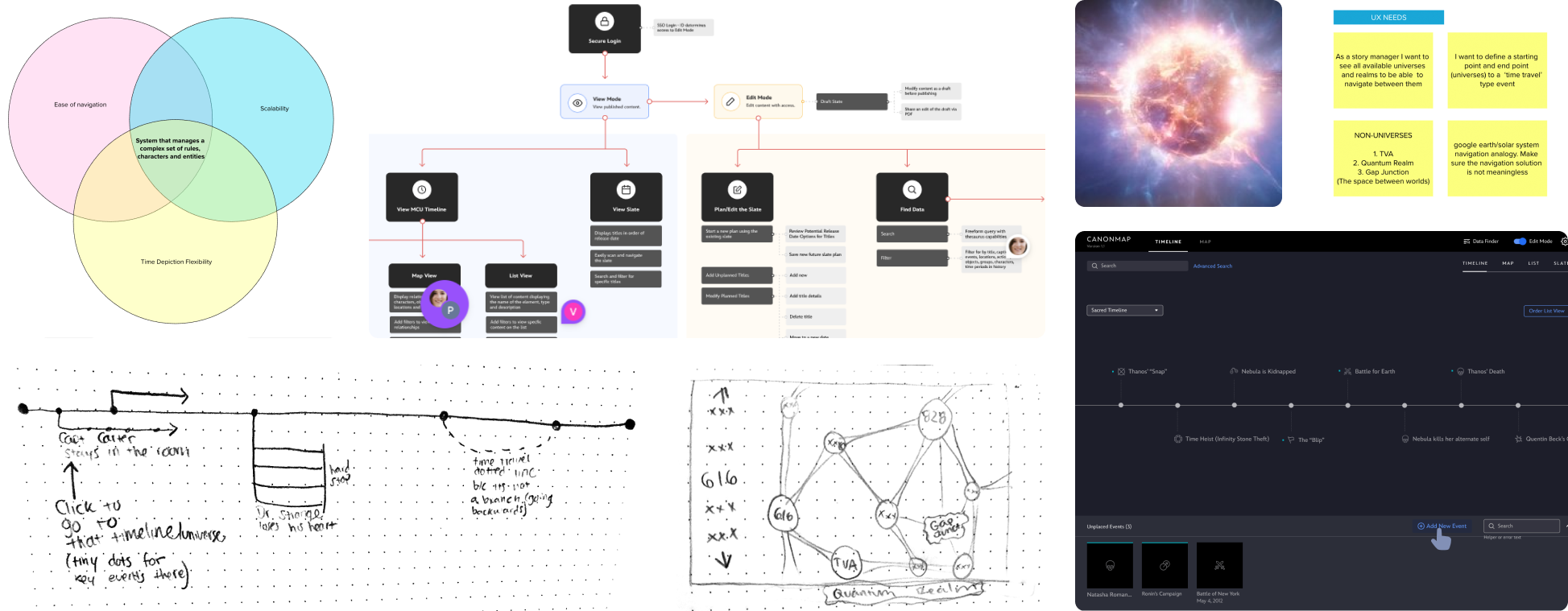
We established a core product principle: automate the movement and organization of data, while keeping meaning, judgment, and accountability in human hands. That principle shaped both the experience and the underlying system, giving Marvel a platform that could scale without sacrificing expert oversight.
Designing for progressive exploration
I shaped the UX around a clear progression: start with the big picture, narrow quickly, and follow a detail wherever it leads. Working with our lead UX designer and product lead, we carried that logic across timelines, events, objects, and relationships, making complex questions easier to explore and answers faster to find.
2.2 Expert Workflows & Navigation
Unify search, exploration, editing, and verification into one experience
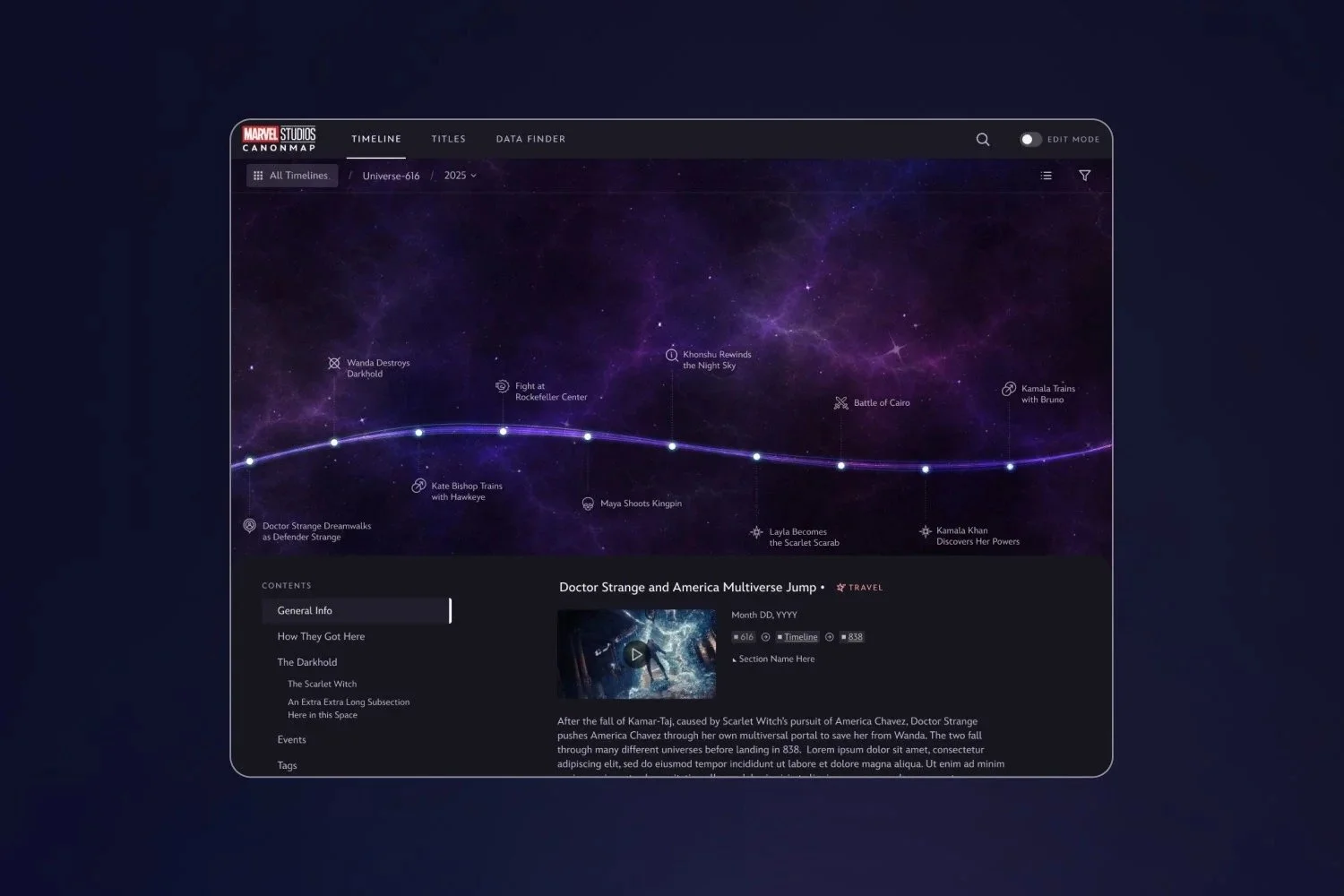
Main Timeline
Establishes orientation, hierarchy, and scanability across a dense narrative space: realities, titles, and branch points at a glance before any detail loads
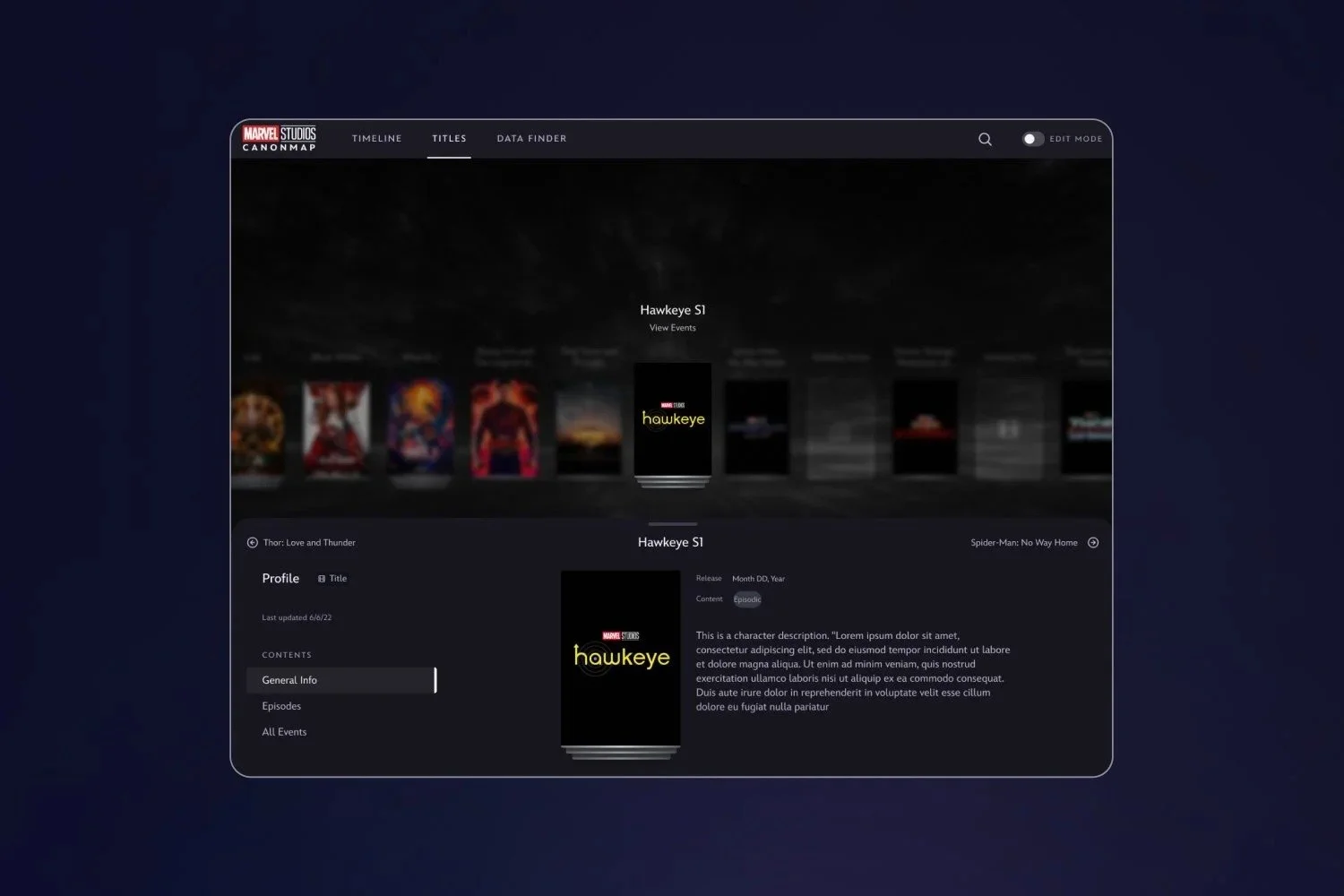
Title Container
One film or series becomes an organizing container for its events, characters, objects, and source material, while staying connected to the larger story.
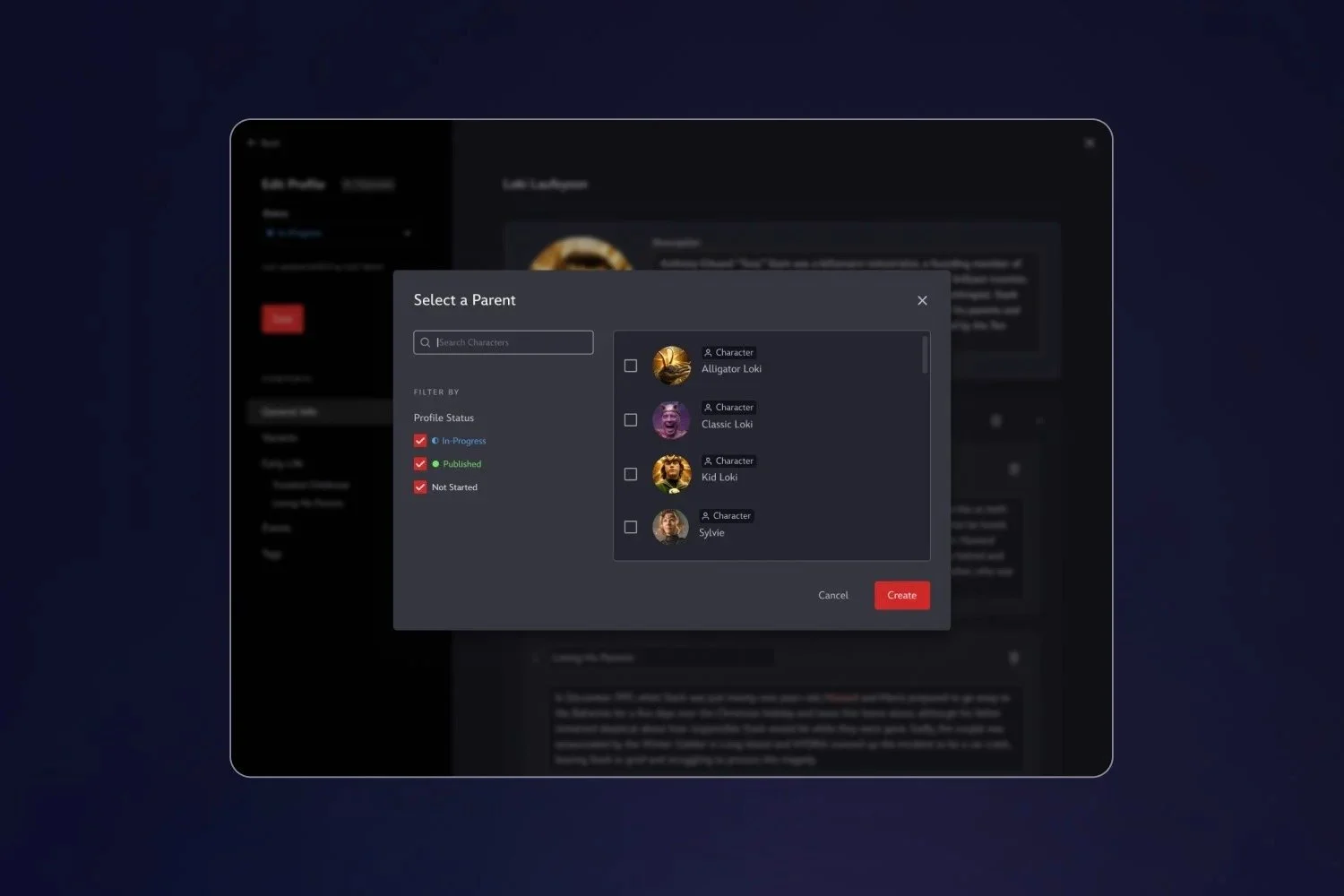
Governed Relationships
Makes connections between records explicit and editable, giving experts a controlled way to define relationships.
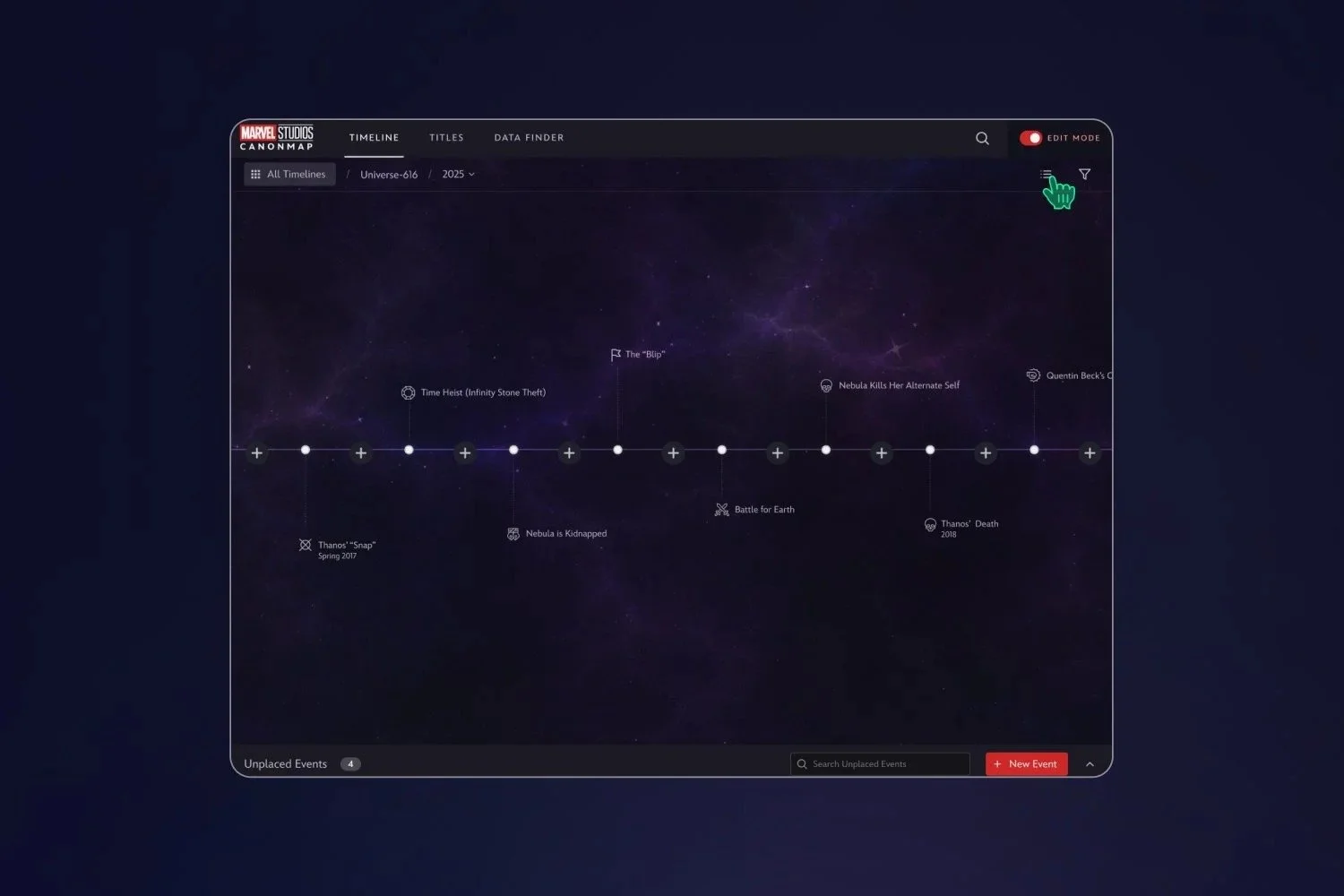
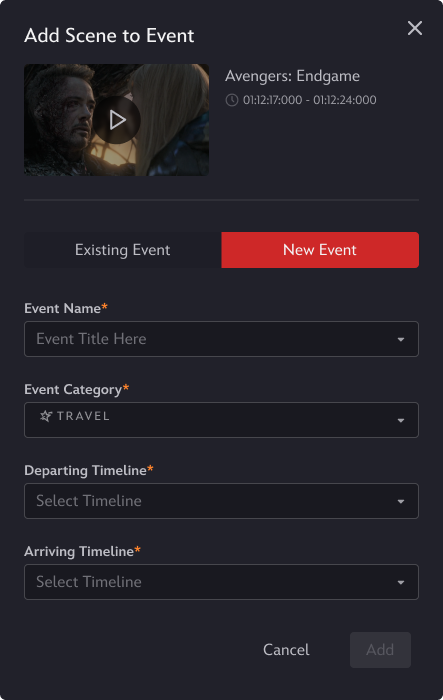
Timeline Curation
Moves from consumption to curation without overwhelming the primary viewing experience. Consequence and permission stay visible, not buried.
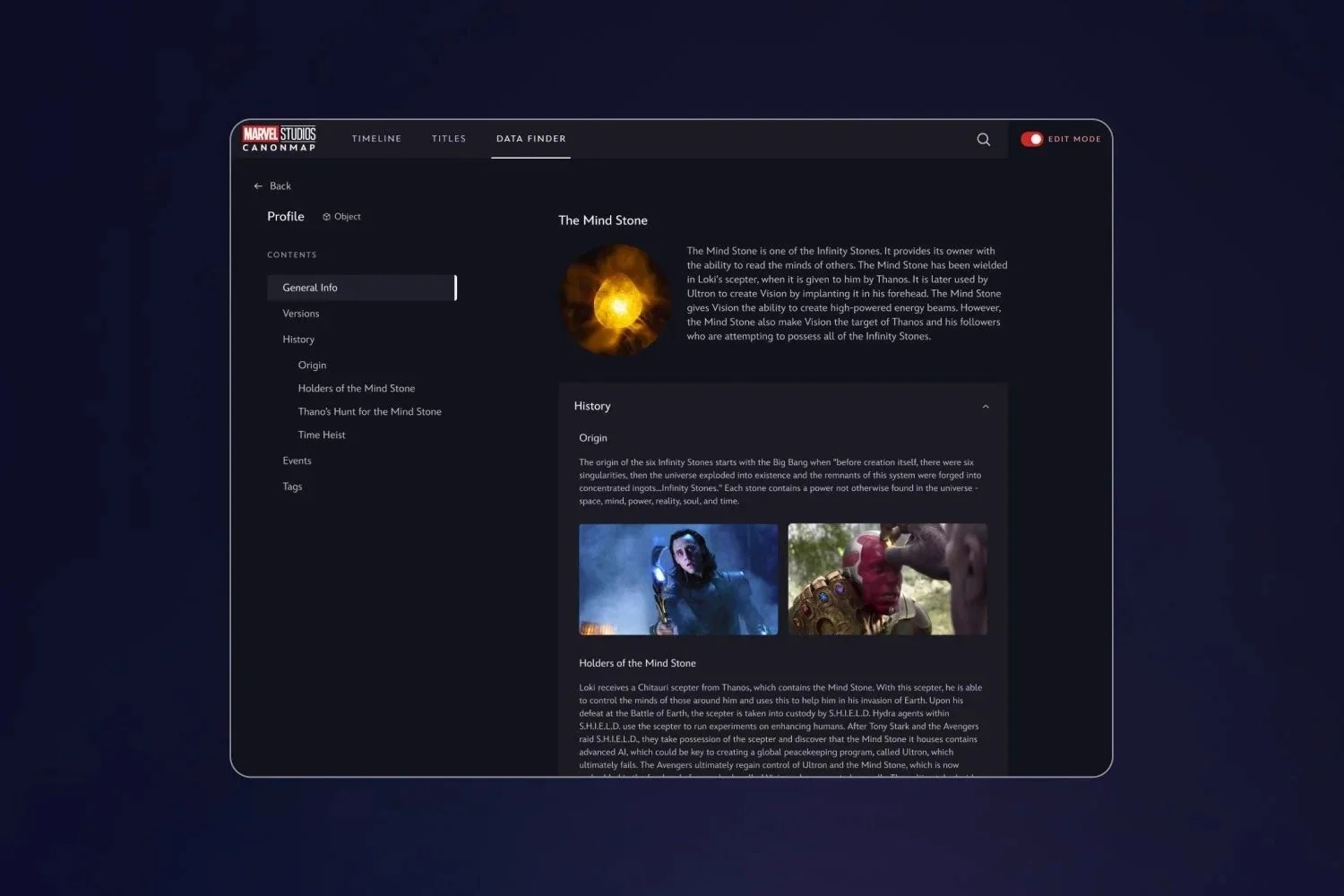
Reusable Profile Model
The same profile pattern expresses identity, attributes, relationships, and change over time consistently, whether the entity is a character, an object, or a place.
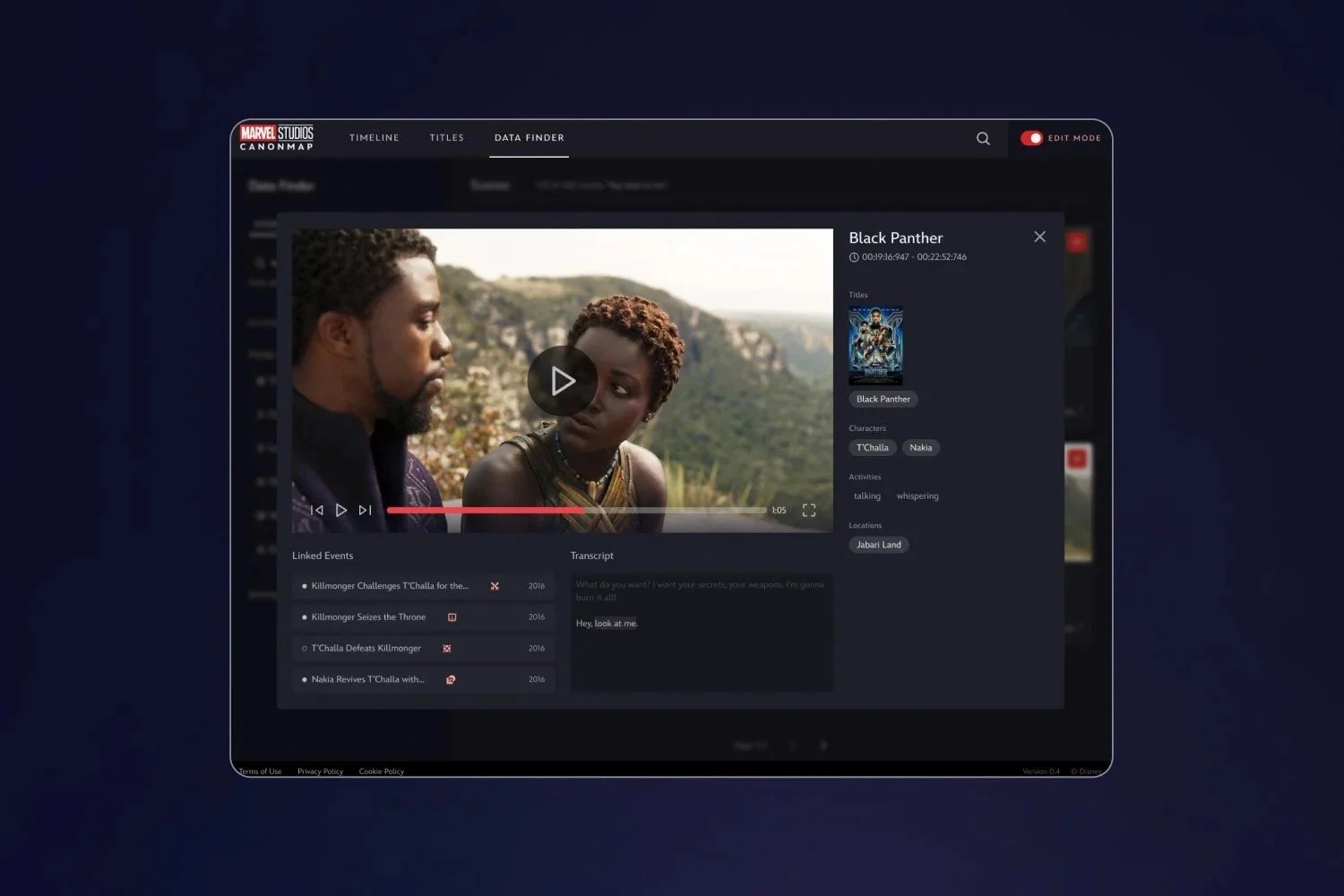
Source-Level Verification
Connects structured knowledge back to its source: how a user verifies a claim in context, not just how the player looks.
2.3 Adoption & Craft Judgment
Use Marvel’s cinematic language to earn attention, then let utility earn trust
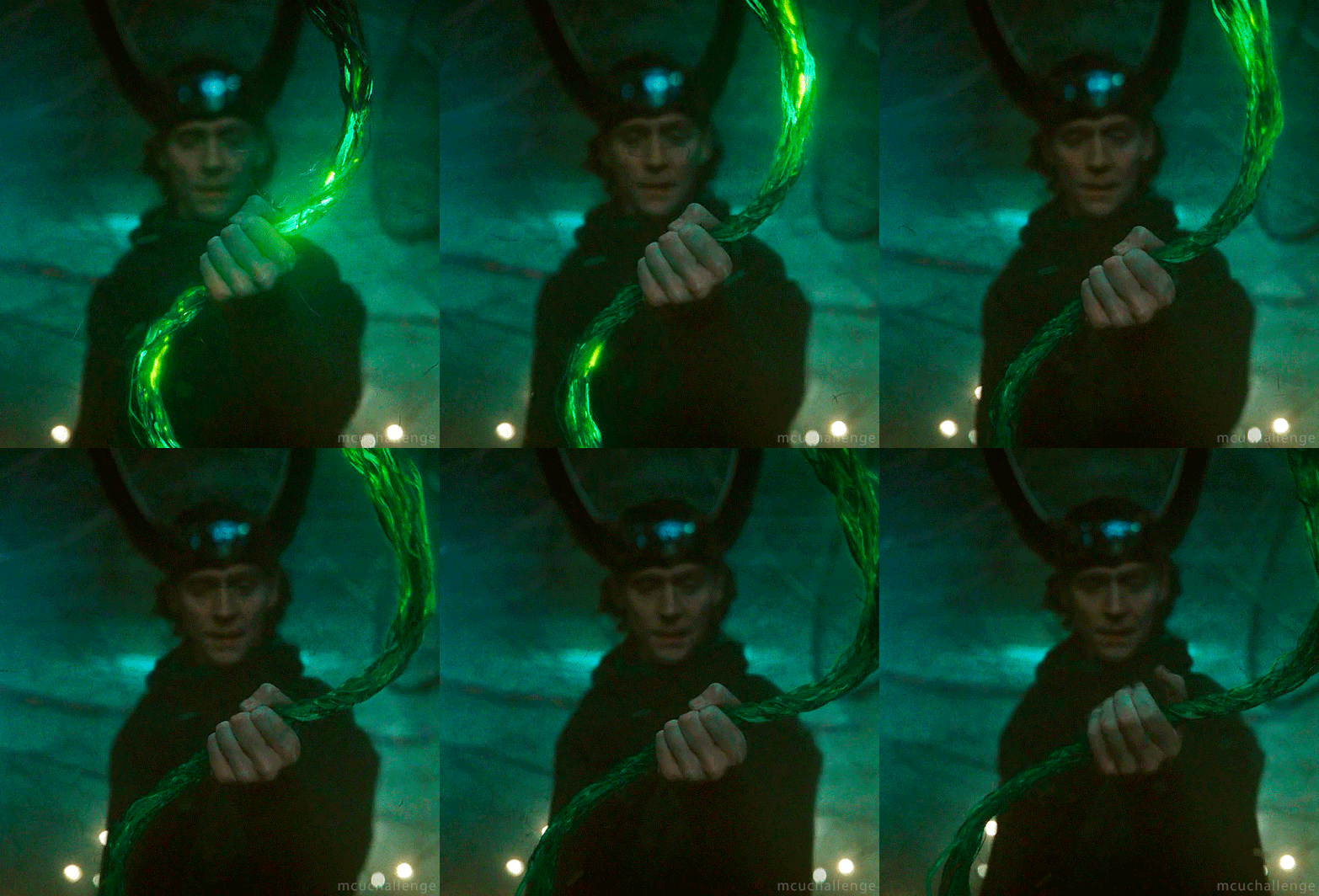
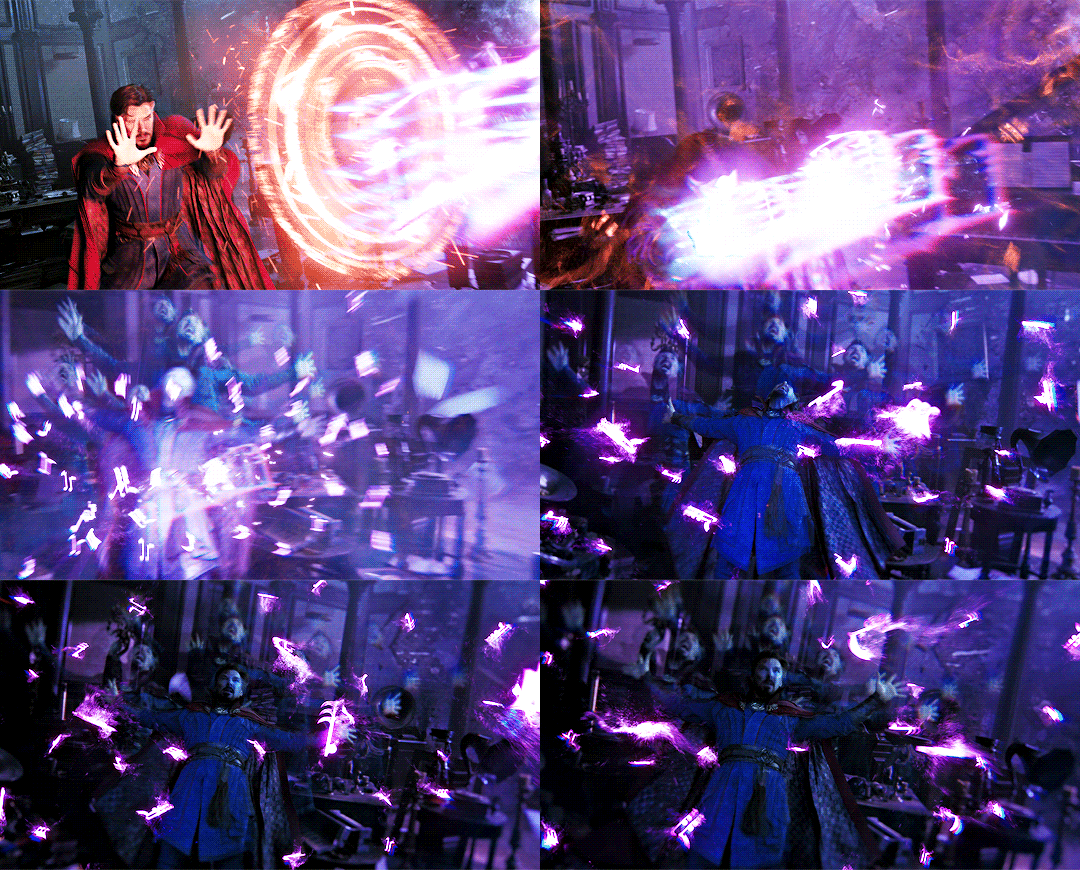
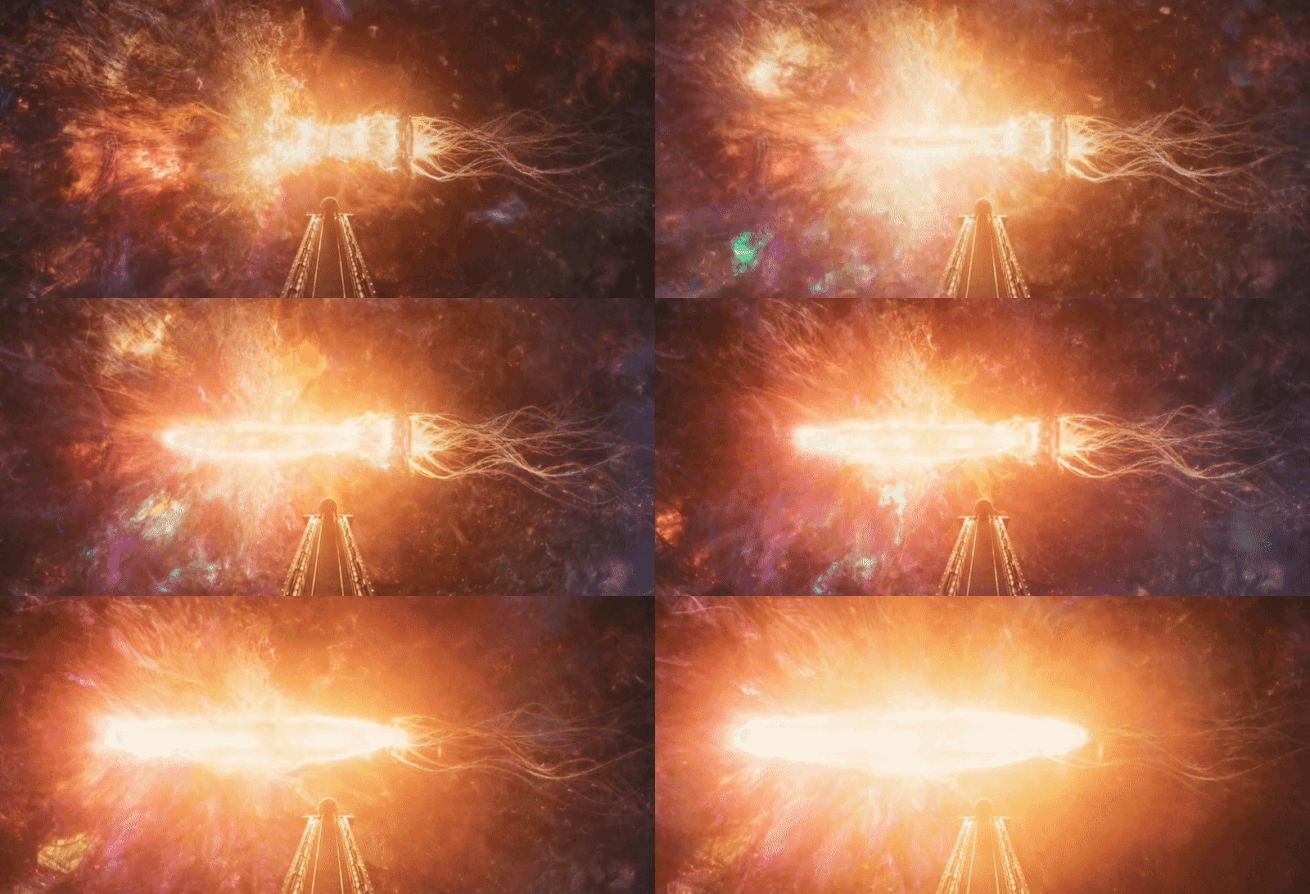
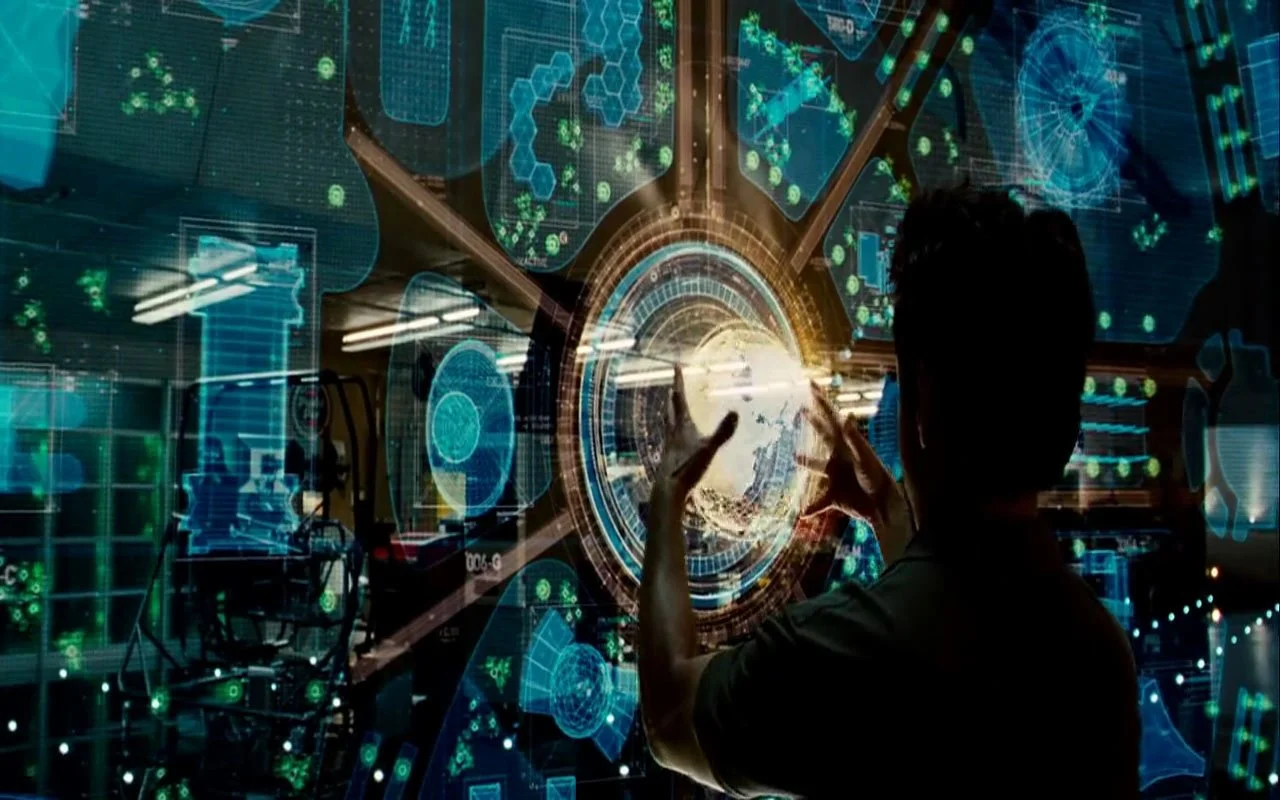
As creative director, I set a clear constraint: borrow selectively from Marvel’s cinematic language while preserving clarity and utility. We translated the films’ celestial environments, branching timelines, glowing nodes, light, depth, and motion into a restrained UI language, using luminous paths and subtle animation to reinforce chronology, relationships, and system state. I established those principles and led our UI team in turning them into production patterns that felt unmistakably Marvel while remaining dense, legible, and built for daily use. The result also made an abstract data model tangible, giving story, engineering, and leadership teams something they could see, evaluate, and invest in.
2.4 Foundation for Expansion
One platform engine. A tailored experience for every brand.






What started as a resource for story production had to hold up across streaming, live entertainment, cruise experiences, and theme parks, each with its own audience and voice. I designed the platform so the same interaction patterns and creative direction could carry across every one of those contexts without a rebuild, a single system as the foundation no matter how many new touchpoints got added to it.
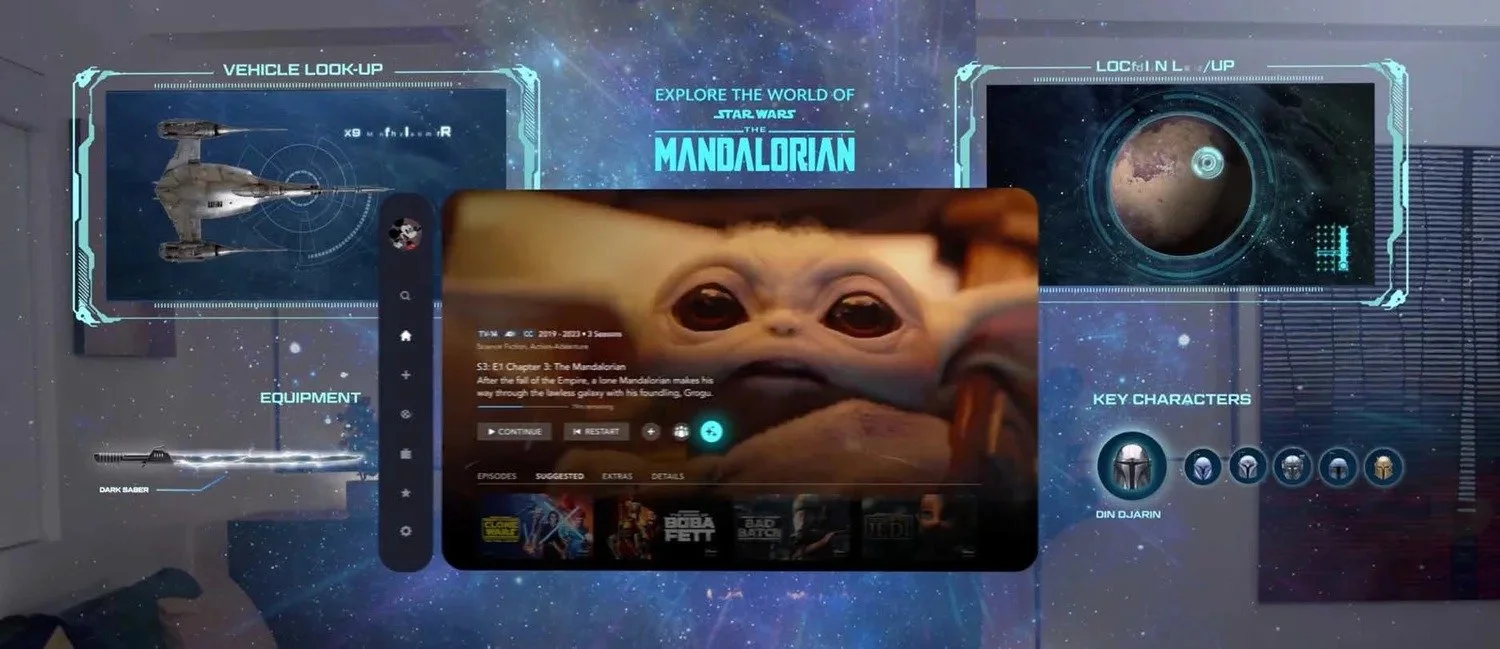
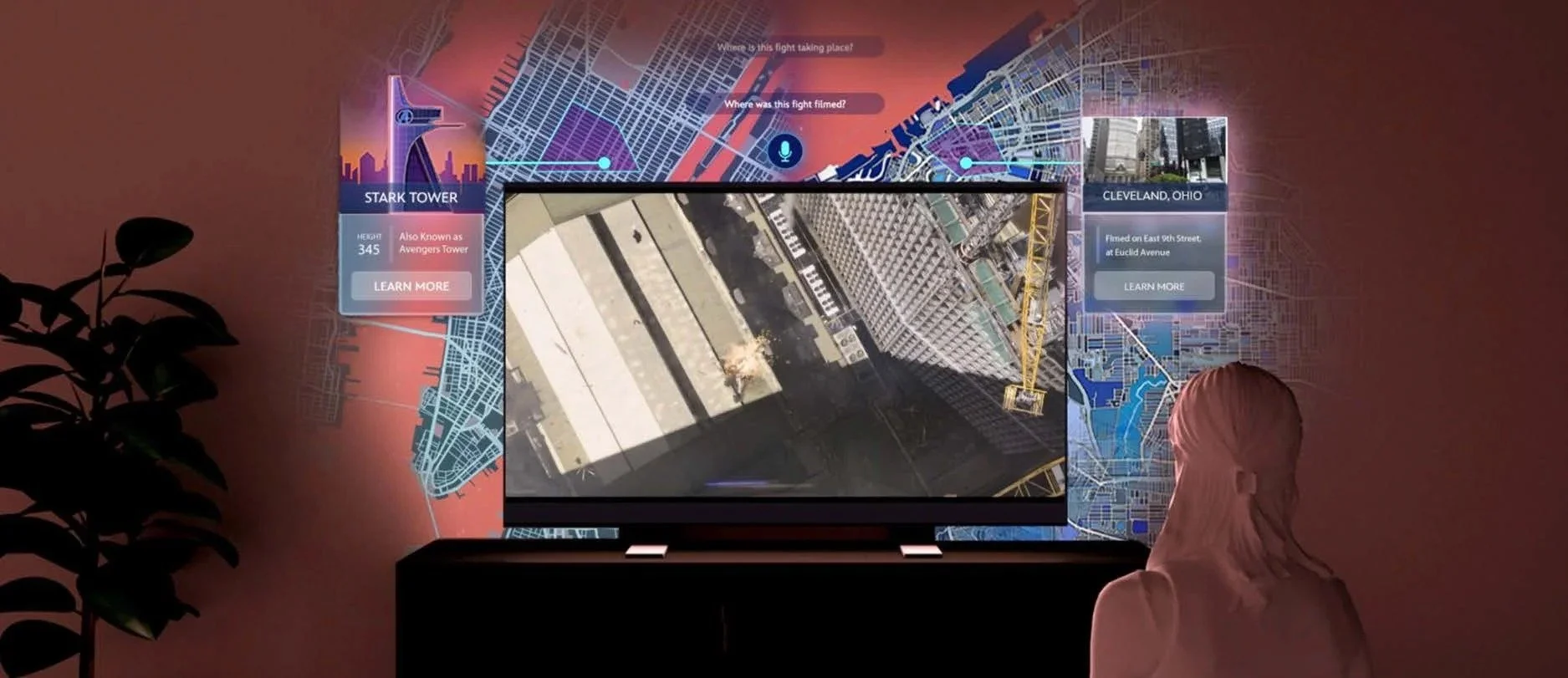
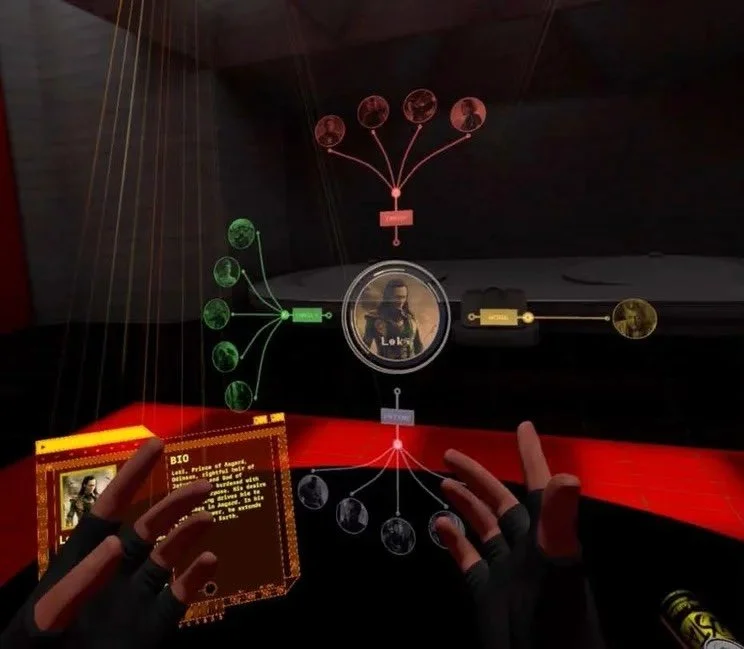
That same system became the reference point for early concept work, a Star Wars franchise extension, an augmented-reality companion, and an early Vision Pro prototype, testing whether one underlying model could support entirely new formats and audiences. None shipped, but each gave leadership a concrete, de-risked case for what to fund and build next: proof that a system designed once could support whatever came after it.
3.0 The Impact
Unified platform that made Marvel’s story decisions faster and more confident
More Work